Blogs
SS 202 vs SS 304 Pipe: Differences, Uses & Comparison
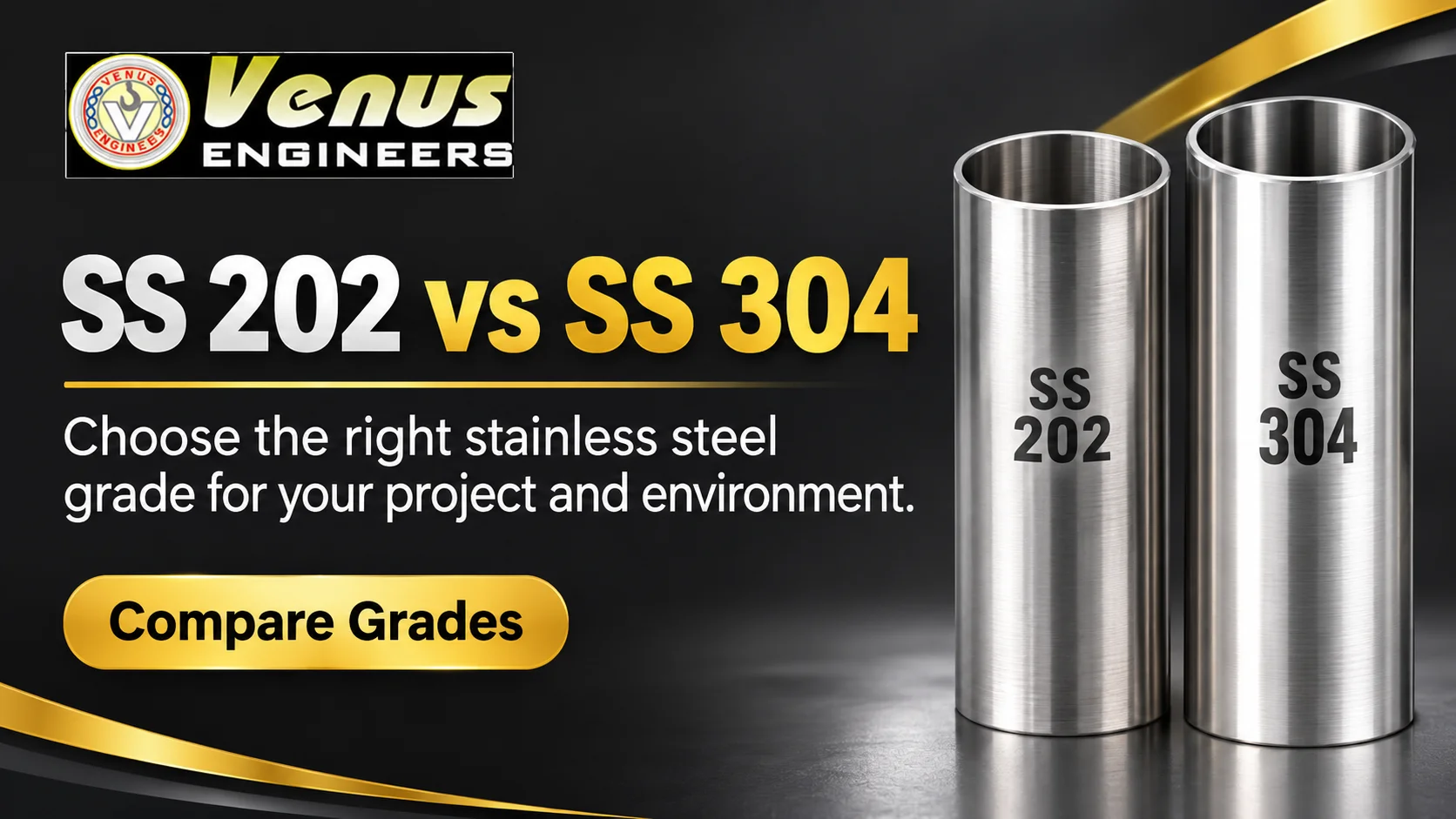
Stainless steel pipe finds use in building, fabrication, furniture, plumbing, and a wide variety of industrial applications. But not every grade performs the same in diverse environmental situations. Common considerations include SS 202 and SS 304. They are both in the austenitic stainless steel family, although they have different chemical makeup and corrosion resistance. The difference between ss 202 vs ss 304 allows the buyer decide on a material that will suit the project needs without paying unduly on properties that may not be required.
How is SS 202 different?
SS 202 is a 200-series austenitic stainless steel that was designed as a less expensive alternative to SS 304. It has around 17-19% chromium, 4-6% nickel with manganese and nitrogen aiding to stabilise its structure. The increased manganese concentration helps to provide it strength and work-hardening properties. 202 grade stainless steel is appropriate for applications requiring moderate corrosion resistance, especially in dry interior conditions, decorative installations, furniture frames and light structural fabrication.
Composition of SS 304
SS 304 comprises roughly 18-20% of chromium and 8-10.5% of nickel. It has a higher nickel content and a more stable austenitic structure and superior corrosion resistance than SS 202 in demanding settings. It is therefore a common material for general industrial applications, kitchens and other areas exposed to moisture or specific chemicals. When the installation requires more consistent resistance to everyday corrosion and exposure, a 304 stainless steel pipe is generally used.
How does strength compare with corrosion resistance?
The big difference between 202 and 304 stainless steel is not just the cost, but also the way they react in different environments. SS 202 has a moderate resistance to corrosion. It can be used in dry or moderately humid places. SS 304 offers superior resistance to moisture, stains and typical corrosive agents. Both grades have useful mechanical qualities, however the choice should be dictated by the operating environment.
Uses: Which grade to use where?
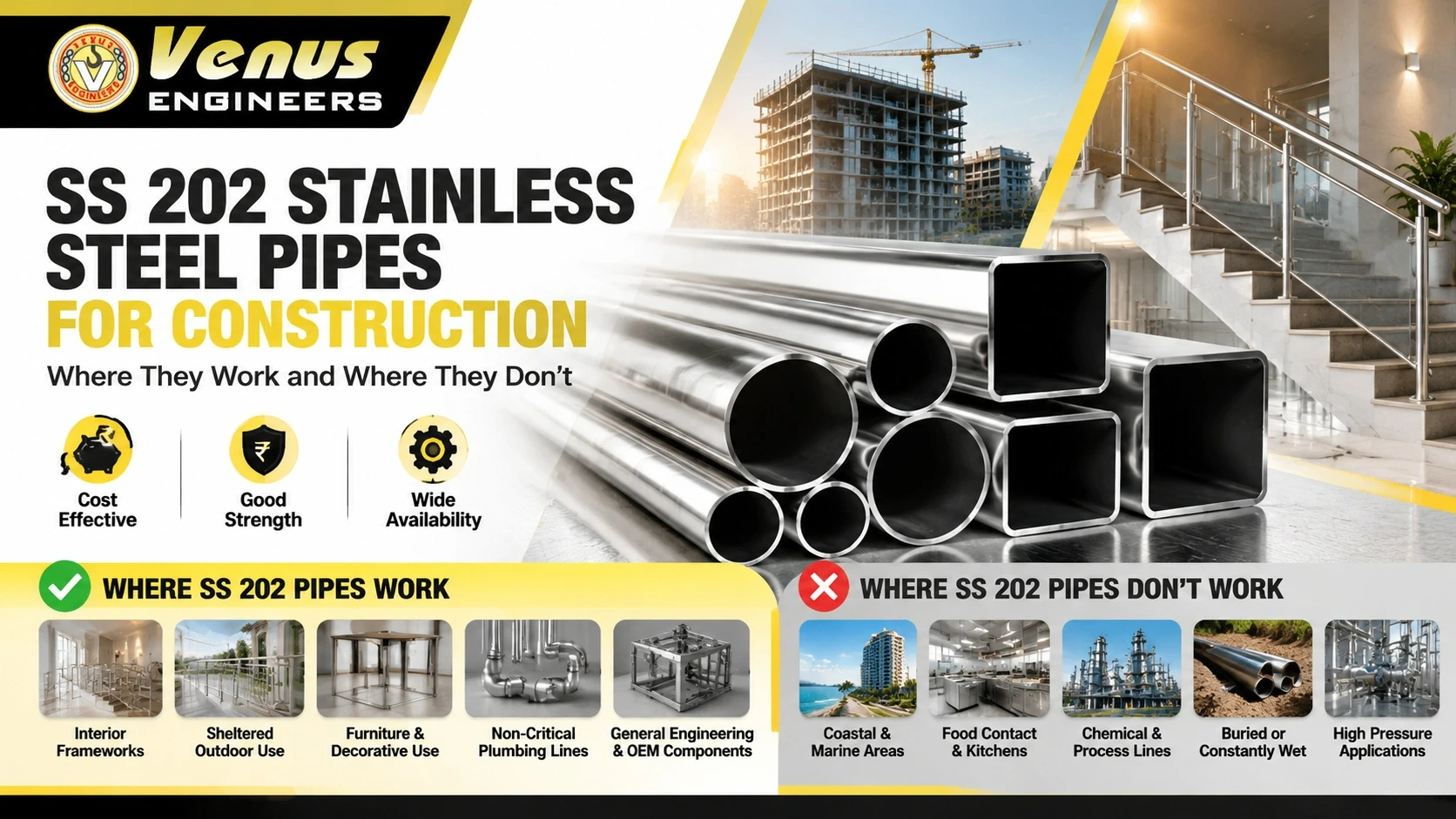
The appropriate grade is determined by the intended use and exposure circumstances of the pipe. SS 202 is often used as indoor handrails, furniture structures, shelving, ornamental fittings, gates and light construction. Its different finishes (brushed and mirror) also make it suitable for visible architectural installations. More corrosion resistance is needed for demanding applications such as industrial pipelines, kitchen equipment and surroundings, making SS 304 more suitable. Comparative analysis of stainless steel grades for pipes in terms of real service conditions allows to avoid problems of material selection.
What You Need To Know About Pricing
Price is a big factor especially if you are buying pipes in bulk. The material cost of SS 202 is often lower than SS 304 as it includes less nickel. Several factors will affect the final quote including outside diameter, wall thickness, manufacturing form, surface finish, quantity and the current raw material rates. Thus, the ss 202 price should be compared with the specs needed for the project and not be looked at as a single number.
The ss 304 pipe price may also vary depending upon the size, finish and the quantity purchased. Before comparing vendors, buyers should get quotations on matching specs. If you select a lower quality for a more corrosive environment, you may end up paying more in maintenance and replacement costs later.
How To Choose The Right Pipe Grade?
A practical ss pipe grade comparison should start with the location of the installation. Assess whether the pipe will be kept inside, exposed to constant wetness, subject to chemicals, or come into contact with food. Verify the appropriate dimensions, wall thickness, finish, and mechanical standards. Buyers should also want a mill test certificate to confirm the material delivered. These inspections are crucial since look alone is not a reliable way to determine if a pipe is SS 202 or SS 304.
If you are wondering which stainless steel pipe is better, it all depends on the use. SS 202 can be a reasonable solution for sheltered indoor structures and decorative work when moderate corrosion resistance is sufficient. SS 304 is typically a better option for kitchens, industrial applications and higher moisture or corrosive situations. The decision to choose 202 vs 304 stainless steel pipe should be based on the intended application, not on cost alone.
Summary
The correct selection of stainless steel grade is a compromise between environmental circumstances, mechanical requirements, finish and buying budget. SS 202 is a cheaper alternative where applicable for interior applications, whereas SS 304 gives stronger resistance to corrosion in more demanding situations. Venus Engineers offers stainless steel pipes in both the grades with varying sizes, wall thickness and coatings. Explore the available possibilities and contact the staff at Venus Engineers to assist you in selecting the right pipe for your project.
FAQs
Is SS 202 good for outdoors?
It is ideally suited to protected places as prolonged exposure to moisture and pollutants can cause discolouration.
SS 304 is more corrosion resistant than SS 202 in general?
It has a higher nickel content which makes it more resistant to corrosion in harsh situations.
TRENDING POST


RECENT POSTS


NEWSLETTER
Subscribe my Newsletter for new blog posts. Stay updated from your inbox!
Leave a Comments