Blogs
Stainless Steel Pipe for Interior Design: Uses, Grades and Finishes
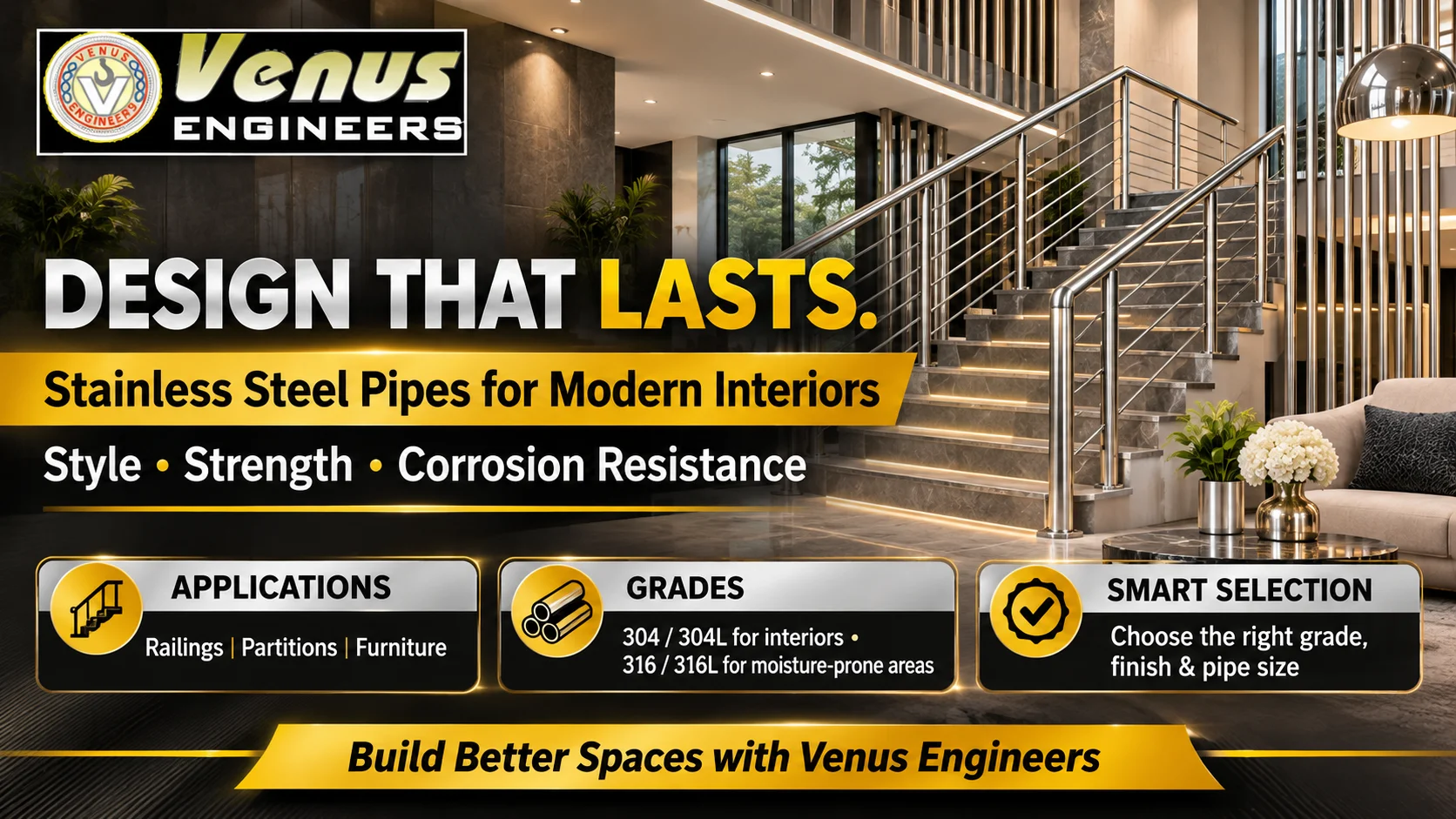
A staircase railing, a modern furniture frame or a decorative partition can change the entire appearance of an interior. The material behind these details matters just as much as the design. Stainless steel pipes offer a combination of strength, a clean appearance and resistance to corrosion, making them a practical choice for residential and commercial interiors.
From contemporary homes to hotels, offices and retail spaces, stainless steel pipes for interior design are used in furniture, railings, shelving, kitchen fittings and decorative structures. Their availability in different shapes, sizes and finishes also gives designers greater freedom when planning interior features.
However, choosing the right pipe requires more than selecting an attractive finish. The stainless steel grade, wall thickness, dimensions and installation environment all affect its performance.
What Are Stainless Steel Pipes Used for in Interior Design?
Stainless steel pipes and tubes serve both functional and decorative purposes. They can support furniture, create partitions, provide handrails and add a modern metallic finish to interior spaces.
Their applications include the following.
1. Stainless Steel Pipes for Furniture
Furniture manufacturers use stainless steel round pipes and square tubes to make table frames, chair legs, bed frames, shelving units and storage systems.
Round profiles suit curved furniture designs and smooth edges. Square profiles work well for geometric furniture and straight frames. Both can be fabricated into different shapes according to the design requirements.
For example, a dining table with a stainless steel frame can combine a wooden, glass or stone top with a clean metallic base. Stainless steel tubing is also used in office furniture, reception desks and hotel furniture.
The selected pipe should have suitable wall thickness and strength for the expected load. A decorative furniture frame and a load-bearing structure may require different specifications.
2. Staircase and Balcony Railings
Railings are among the most visible uses of stainless steel in interior architecture.
Stainless steel railing pipes can be used for staircase handrails, balcony barriers, mezzanine railings and corridor supports. They can also be combined with glass panels to create an open appearance.
Round pipes are commonly selected for handrails because they provide a comfortable gripping surface. Square and rectangular profiles are suitable for modern railing designs with straight lines.
For safety-related applications, the pipe dimensions, support spacing, connections and anchoring must be designed according to the applicable building requirements. A decorative finish alone does not establish that a railing is structurally suitable.
3. Interior Partitions and Room Dividers
Open-plan homes and offices often need separate functional areas without completely blocking natural light.
Stainless steel tubes can form frames for glass partitions, office dividers, decorative screens and entrance structures.
Square and rectangular tubes are particularly useful for these applications because their flat surfaces make fabrication and alignment easier.
Designers can also combine stainless steel with wood, glass or other materials to match the interior theme.
4. Kitchen and Bathroom Interiors
Stainless steel is frequently used in kitchen shelves, storage racks, cabinet supports, towel holders and bathroom accessories.
These areas can experience regular contact with water, cleaning products and humidity. The grade and maintenance requirements should therefore be considered carefully.
SS 304 pipe is generally a more suitable starting point than SS 202 for areas exposed to frequent moisture or cleaning. For locations with high chloride exposure, such as coastal properties or swimming pool facilities, a higher-corrosion-resistance grade such as SS 316 may be worth considering.
The finish should also be easy to clean and suitable for the intended use.
5. Decorative Structures and Display Fixtures
Interior designers use stainless steel tubes to create decorative wall frames, retail display stands, exhibition structures, lighting supports and showroom furniture.
Mirror-finished pipes can add reflective details, while brushed finishes create a more understated appearance.
These applications allow stainless steel to become part of the interior design rather than remaining hidden inside a structure.
Types of Stainless Steel Pipes Used in Interior Design
The shape of a pipe influences its appearance, fabrication and suitability for different applications.
Stainless Steel Round Pipes
Stainless steel round pipes have a circular cross-section and are widely used for handrails, furniture legs, wardrobe rods and decorative supports.
Their smooth profile suits curved designs and applications where users regularly touch the surface.
Common applications include:
- Staircase handrails.
- Chair and table frames.
- Wardrobe hanging rods.
- Bathroom fittings.
- Decorative supports.
Stainless Steel Square Pipes
SS square pipes have four equal sides and are commonly used in furniture frames, shelving structures, partitions and railing supports.
Their flat faces make it easier to align components and create straight geometric designs.
They are particularly suitable for contemporary interiors that use clean lines and angular shapes.
Stainless Steel Rectangular Tubes
Rectangular stainless steel tubes have two different side dimensions. They are useful for furniture structures, display systems, partition frames and architectural supports where the design requires a wider profile.
The selection between round, square and rectangular profiles should depend on the drawing, load requirements, connection method and intended appearance.
ASTM A554 is one relevant specification for welded stainless steel mechanical tubing. It covers round, square, rectangular and special shapes for ornamental, structural and other mechanical applications. The applicable specification should be confirmed against the actual project requirements.
SS 202 vs SS 304: Which Is Better for Interior Design?
Choosing the correct stainless steel grade affects the material's corrosion resistance, cost and suitability for the installation environment.
Two commonly discussed grades are SS 202 and SS 304.
Understanding SS 202
SS 202 belongs to the 200 series of austenitic stainless steels. It contains approximately 17–19% chromium and 4–6% nickel, with manganese and nitrogen used as part of its composition.
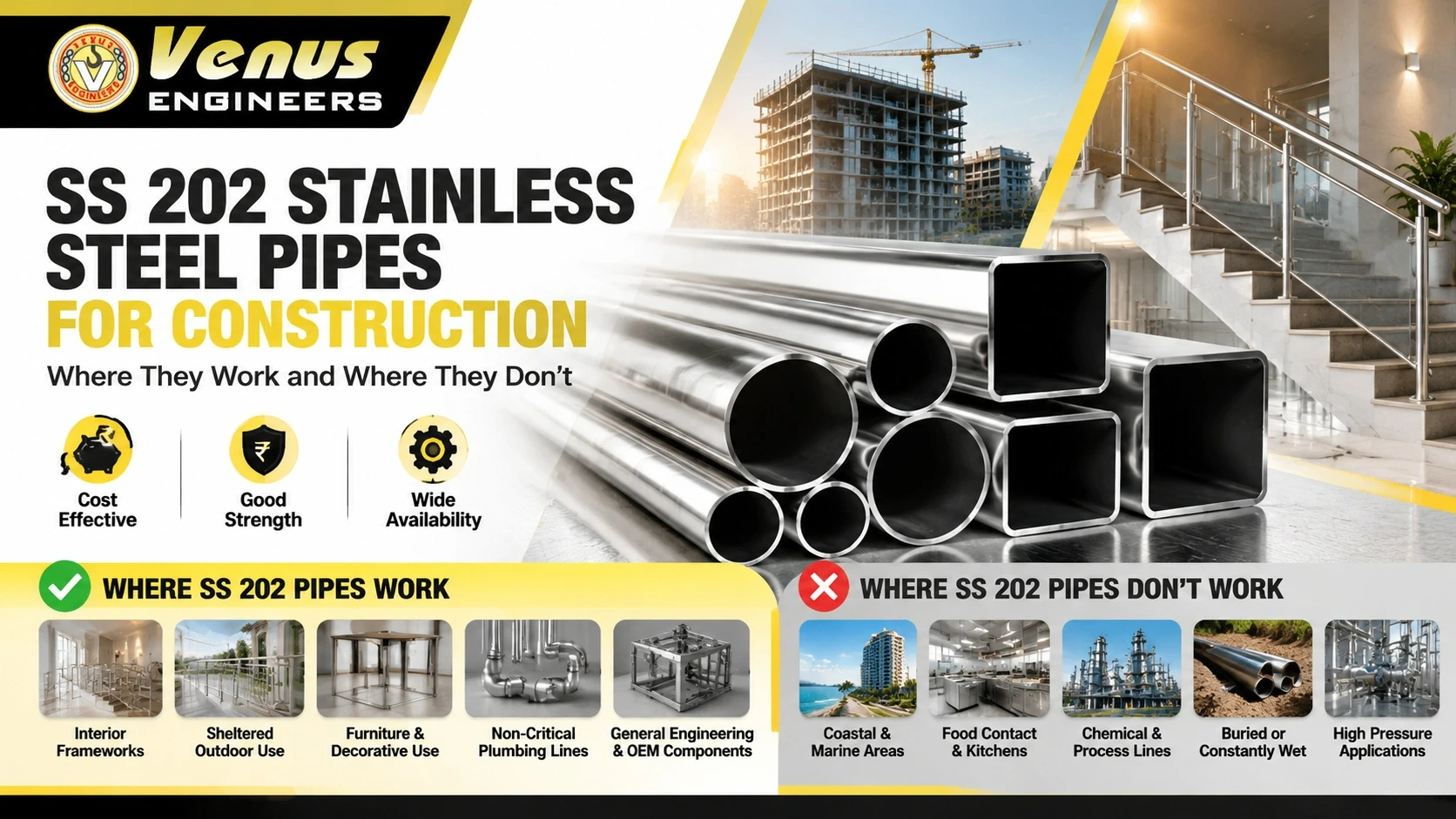
It is often considered for dry indoor applications where budget and appearance are major considerations.
Suitable applications may include:
- Indoor furniture frames.
- Decorative partitions.
- Shelving structures.
- Interior display fixtures.
- Sheltered indoor railings.
However, SS 202 offers lower corrosion resistance than SS 304 in more demanding environments. It should not be selected simply because its initial purchase price is lower.
Read the SS 202 stainless steel pipe specifications before deciding if this grade suits your project.
Understanding SS 304
SS 304 stainless steel pipe is an austenitic chromium-nickel grade containing approximately 18–20% chromium and 8–10.5% nickel.
Its corrosion resistance makes it a widely used option for architectural fittings, kitchen components, furniture and interior structures.
It is generally preferable for areas where cleaning, moisture and regular handling are expected.
Typical applications include:
- Kitchen fittings and storage structures.
- Bathroom accessories.
- Commercial interior railings.
- Frequently cleaned furniture.
- Architectural installations.
For product specifications, refer to the SS 304 stainless steel pipe page.
SS 202 vs SS 304 Comparison
|
Parameter |
SS 202 |
SS 304 |
|
Chromium |
17–19% |
18–20% |
|
Nickel |
4–6% |
8–10.5% |
|
Corrosion resistance |
Moderate |
Better for general use |
|
Material cost |
Generally lower |
Generally higher |
|
Dry indoor furniture |
Suitable, subject to design |
Suitable |
|
Humid interior areas |
Requires more care |
Generally preferred |
|
Coastal exposure |
Not preferred |
May require a higher grade |
|
Maintenance |
Environment dependent |
Environment dependent |
Composition ranges are typical specification ranges. Confirm the actual material certificate for the supplied batch.
The choice is straightforward: SS 202 can suit dry, sheltered interiors where the exposure conditions are controlled. SS 304 is generally a better choice for areas with frequent moisture, cleaning or greater exposure to corrosive substances.
Neither grade should be treated as rust-proof under every condition.
Planning an interior fabrication project? Venus Engineers supplies stainless steel pipes in SS 202 and SS 304 grades for different material requirements. Contact the team to discuss the appropriate grade, dimensions and finish for your application.
Best Stainless Steel Pipe Finishes for Interior Design
The surface finish influences how a stainless steel pipe looks, how easily marks are noticed and how it should be maintained.
1. Brushed Finish
A brushed finish has a fine directional grain that gives the surface a satin appearance.
It is commonly used for staircase railings, handrails, kitchen fittings and furniture frames.
This finish can make fingerprints less noticeable than highly polished surfaces, although it still needs routine cleaning.
2. Mirror Finish
Mirror-finished stainless steel has a highly reflective surface.
It is used in decorative structures, premium furniture, hotel interiors, display fixtures and architectural features.
Its reflective appearance can complement glass, stone and polished wood. However, fingerprints and surface scratches may be more visible, so regular care is necessary.
3. Satin Finish
A satin finish provides a soft, low-gloss appearance.
It suits modern interiors where designers want a metallic surface without strong reflections.
It can be used for furniture components, decorative partitions and interior handrails.
4. 2B Mill Finish
The 2B finish is a smooth, cold-rolled mill finish with a relatively subdued appearance.
It is commonly specified for functional or concealed components where a decorative polish is not required.
For exposed interior applications, designers may prefer a brushed or polished finish depending on the visual requirements.
How to Choose the Right Stainless Steel Pipe Size
The correct pipe size depends on its intended function, design and load requirements.
Before ordering, consider these specifications.
- Outside diameter: This is the measurement across the outside of a round pipe. It affects the overall profile and compatibility with fittings.
- Wall thickness: This refers to the thickness of the pipe wall. It influences weight, strength and fabrication requirements.
- Length: Confirm whether standard lengths or cut-to-size material is needed.
- Shape: Select round, square or rectangular profiles according to the design drawing.
- Grade: Specify SS 202, SS 304 or another suitable grade according to the operating environment.
- Surface finish: Mention whether the project requires a brushed, mirror or mill finish.
For example, a handrail and a furniture support may use different outside diameters and wall thicknesses. The final dimensions should be selected by the designer or fabricator after considering the load, span, fixing arrangement and applicable safety requirements.
A supplier can help confirm the available stainless steel tube sizes and fabrication options.
Benefits of Stainless Steel Pipes in Interior Design
Stainless steel offers several practical advantages for interior projects.
- Clean appearance: Its metallic surface works with contemporary, industrial and minimalist interior styles.
- Corrosion resistance: Suitable grades resist corrosion in many indoor environments.
- Design flexibility: Round, square and rectangular profiles support different fabrication requirements.
- Strength: Properly specified tubing can support furniture, railings and other interior structures.
- Easy cleaning: Smooth stainless steel surfaces can generally be maintained with simple cleaning methods.
- Material compatibility: Stainless steel can be combined with wood, glass, stone and other interior materials.
- Long service potential: With correct grade selection, fabrication and maintenance, stainless steel fittings can provide long-term service.
The actual performance depends on the grade, surface condition, exposure and quality of installation.
How to Maintain Stainless Steel Interior Fittings
Stainless steel requires routine care to maintain its appearance.
Use these simple maintenance practices:
- Clean surfaces with mild soap or detergent and clean water.
- Use a soft cloth or non-abrasive cleaning material.
- Rinse away cleaning residue.
- Dry the surface to reduce water marks.
- Avoid harsh chloride-based cleaners and abrasive pads.
- Clean fingerprints and stains before they build up.
- For brushed finishes, clean in the direction of the existing grain.
Avoid using steel wool or ordinary carbon-steel brushes, as they can leave particles that may cause surface rust staining.
The British Stainless Steel Association also recommends mild detergent cleaning, rinsing and drying for routine maintenance of internal stainless steel applications.
What to Check Before Buying Stainless Steel Pipes
Before placing an order, make sure the material matches your project's requirements.
Here is a practical purchasing checklist:
- Grade confirmation: Verify whether the material is SS 202, SS 304 or another grade.
- Material certificate: Ask for a Mill Test Certificate (MTC) to check the chemical composition and mechanical properties.
- Dimensions: Confirm outside diameter, side dimensions, wall thickness and length.
- Surface finish: Specify the required finish and check a sample if appearance is important.
- Manufacturing type: Confirm whether welded or other specified tubing is required.
- Fabrication requirements: Discuss bending, cutting, welding and finishing before production.
- Quantity and delivery: Confirm the required quantity, standard lengths and cut-to-size requirements.
Choosing a supplier based only on the quoted price can create problems if the supplied grade, dimensions or finish do not match the approved specification.
If you are comparing stainless steel pipe manufacturers in India, ask for clear technical details and supporting material documentation before making a purchase.
Why Choose Venus Engineers for Stainless Steel Pipes?
Selecting the right material supplier helps keep fabrication and installation aligned with the project specification.
Venus Engineers supplies stainless steel pipes in SS 202 and SS 304 grades for industrial, architectural and fabrication requirements. The company provides product information, size options and material specifications to help buyers assess their requirements.
For interior designers, contractors and furniture manufacturers, the selection process should begin with the application, followed by the required grade, dimensions and finish.
Explore the stainless steel pipe manufacturer and supplier range at Venus Engineers to review available products.
Planning a new furniture, railing or interior decoration project? Contact Venus Engineers with your required grade, pipe dimensions, finish and quantity to request product details and a quotation.
Frequently Asked Questions
1. What is the full form of SS pipe?
SS stands for stainless steel. An SS pipe is a pipe manufactured from stainless steel, an iron-based alloy containing chromium for corrosion resistance.
2. Which stainless steel grade is best for interior design?
SS 304 is a widely used choice for interior applications where moisture, regular cleaning or frequent handling is expected. SS 202 can suit dry, sheltered indoor applications where the environmental conditions are less demanding.
3. Are stainless steel pipes suitable for furniture?
Yes. Stainless steel pipes and tubes are used in table frames, chair legs, shelving units, bed frames and display furniture. The dimensions and wall thickness should match the design and expected load.
4. What is the difference between stainless steel pipes and tubes?
The terms are often used interchangeably in general conversation. In technical purchasing, pipes are commonly specified by nominal size and schedule, while tubes are generally specified by outside diameter and wall thickness. The applicable product standard and dimensional requirements should always be checked.
5. Which is better for furniture: round or square stainless steel pipe?
Round pipes are suitable for curved furniture designs, handrails and smooth profiles. Square pipes work well for straight frames, shelving and geometric furniture. The best choice depends on the design and fabrication requirements.
6. Do stainless steel pipes rust indoors?
Stainless steel resists corrosion, but it is not completely immune to rust staining. Moisture, chlorides, surface contamination and unsuitable cleaning products can affect performance. Correct grade selection and regular cleaning help reduce these problems.
7. Which finish is suitable for stainless steel interior railings?
A brushed or No. 4 finish is a popular choice because it gives railings a subtle metallic appearance. Mirror finishes are another option for decorative interiors, although they show fingerprints and scratches more readily.
8. How do I choose a stainless steel pipe manufacturer in India?
Check the manufacturer's product range, grade specifications, available dimensions, material certificates, surface finishes and supply capabilities. Ask for documentation that confirms the supplied material matches your purchase specification.
9. Is SS 202 cheaper than SS 304?
SS 202 is generally less expensive because it contains less nickel. However, the actual price depends on the dimensions, wall thickness, finish, quantity and current raw material rates.
10. What information should I provide when requesting an SS pipe quotation?
Share the required grade, pipe shape, outside diameter or side dimensions, wall thickness, length, finish and order quantity. A technical drawing is also useful for custom fabrication requirements.
Final Thoughts
Stainless steel pipes can add both function and visual appeal to residential and commercial interiors. From furniture frames and staircase railings to kitchen fittings and decorative partitions, the material offers several design possibilities.
The right selection depends on the environment, grade, dimensions, surface finish and fabrication requirements. SS 202 can suit many dry indoor applications, while SS 304 is generally preferable where greater corrosion resistance is needed.
Before placing an order, confirm the technical specifications and material documentation with your supplier.
For stainless steel pipe requirements, connect with Venus Engineers to discuss SS 202 and SS 304 options for your interior design or fabrication project.
TRENDING POST


RECENT POSTS

NEWSLETTER
Subscribe my Newsletter for new blog posts. Stay updated from your inbox!
Leave a Comments